Selling an Inherited Home Through Probate in Detroit, MI: A Complete, Honest Guide
Skip The AgentSelling an inherited home through probate in Detroit typically takes 6 to 12 months under Michigan’s Estates and Protected Individuals Code (EPIC), and the personal representative generally has authority to sell real estate without prior court approval unless the estate is under supervised administration. With Detroit’s median sale price at $99,940 as of May 2026 (Redfin) and homes taking roughly 46 days to sell on the traditional market, carrying costs can drain an estate quickly during a long probate. Skip The Agent buys inherited Detroit homes as-is with a written cash offer in 24 hours and closing in as few as 7 days, with zero commissions, zero repairs, and zero closing costs charged to the seller.
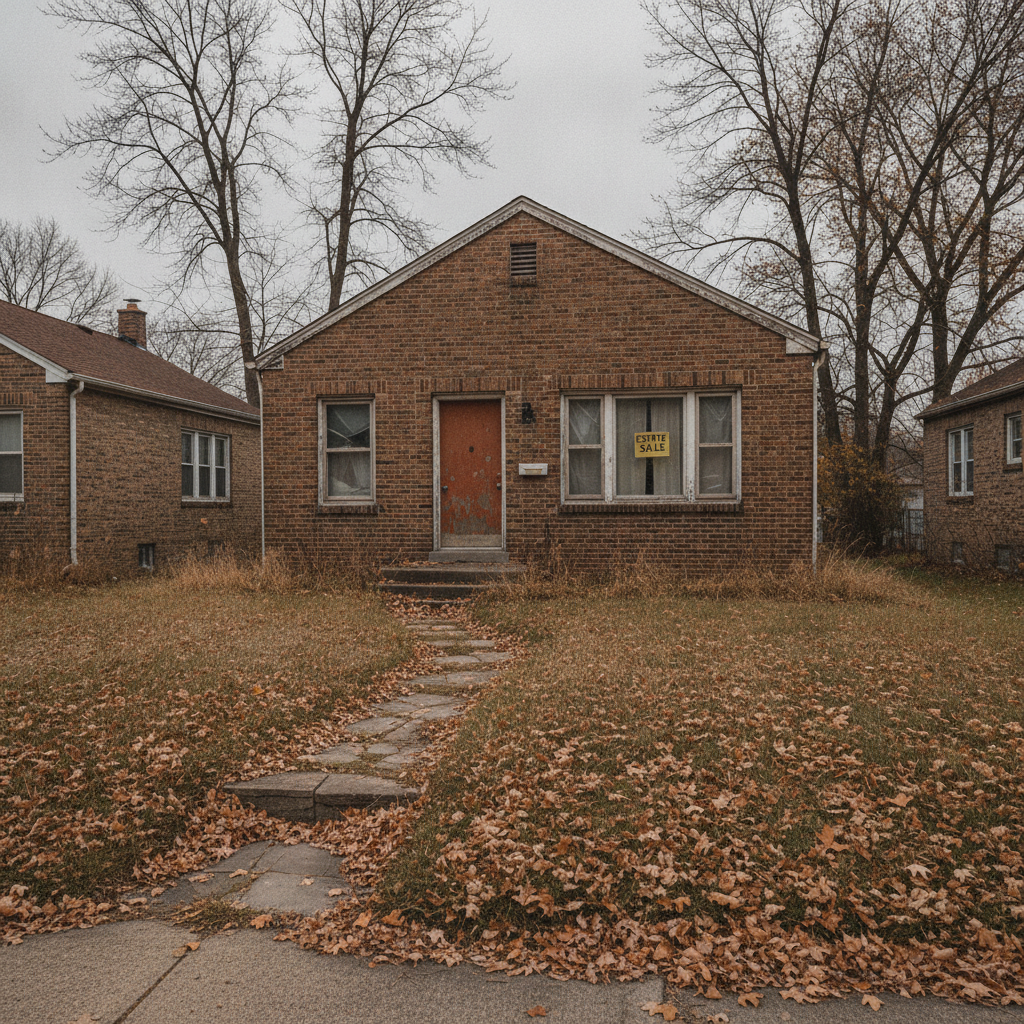
If you are the personal representative for a parent’s estate in Wayne County, or a sibling group trying to figure out what to do with a bungalow on the east side that has sat empty since the funeral, this guide is written for you. It is also for the out-of-state heir who inherited a Detroit property they have never seen, and for the executor trying to sell a house that needs a roof, a furnace, and a full clean-out before a traditional agent will even list it.
We are not going to pretend a cash sale is the right answer for every estate. It is not. But we are going to give you the actual Michigan statute references, the Wayne County Probate Court realities, and the math, so you can decide with clear eyes.
The emotional weight nobody warns you about
Before the legal steps, one honest sentence: probate is grief with paperwork attached. You are being asked to make cold financial decisions about the house where you grew up, or the house your father spent forty years paying off, while you are still figuring out how to say his name in past tense.
Every choice in this guide sits on top of that. Take the timelines seriously, but do not let a real estate deadline push you into a decision you have not had time to actually think about. In most Michigan probates, you have more time than you think, and slightly less than you would like.
How Michigan probate actually works in 2026
Michigan probate is governed by the Estates and Protected Individuals Code (EPIC), codified in MCL 700. The court that will handle a Detroit-based estate is the Wayne County Probate Court, located at the Coleman A. Young Municipal Center.
The three probate tracks
Michigan uses three tracks in 2026, and which one you end up on drives everything else:
- Informal probate. The default for uncontested estates. Filed with the register, minimal court involvement, and the personal representative can generally sell real estate without a hearing.
- Formal probate. Used when someone contests the will, the personal representative, or a specific action. Requires judge involvement and slows every step down.
- Supervised administration. The highest oversight track. The judge must approve major actions, including any sale of the home. This is where sale-specific hearings can add 4 to 8 weeks to your timeline.
Most Detroit probates run informal. If your siblings agree on who is in charge and what happens to the house, you will likely stay in that lane.
When you might avoid probate entirely
Michigan’s small estate affidavit under MCL 700.3983 has a 2026 threshold of about $53,000, but here is the catch: the estate cannot include real property. If there is a house, this door is closed unless the house transferred outside probate.
Ways a Detroit house may have already avoided probate:
- Lady Bird deed (enhanced life estate deed) filed before death
- Joint tenancy with right of survivorship with the surviving spouse or co-owner
- Transfer-on-death vehicle if one was set up
- Living trust with the property titled to the trust
Pull the deed from the Wayne County Register of Deeds before you assume probate is required. A twenty-dollar copy of the deed can save you six months.
The personal representative’s authority to sell
Under MCL 700.3715, the personal representative has broad statutory authority to manage and sell real estate belonging to the estate. In an informal probate, you generally do not need a court order to list, accept an offer, or close.
In Michigan, the personal representative of a probate estate can typically sell the decedent’s home without prior court approval under MCL 700.3715, unless the estate is in supervised administration or the will restricts the sale. The sale proceeds flow back into the estate and are distributed to heirs after debts, taxes, and administration costs are paid. This means informal probates in Wayne County can move to sale within weeks of Letters of Authority being issued.
What you will need before you can sign anything at closing:
- Letters of Authority issued by the Wayne County Probate Court
- A certified copy of the death certificate
- The Wayne County probate case number for the title company
- Notice to interested persons (heirs and creditors), depending on your track
- Michigan Property Transfer Affidavit (Form L-4260) filed with the City of Detroit Assessor within 45 days of transfer
Title companies in Detroit will ask for the Letters and the case number the moment you open escrow. If you are still waiting on Letters, you can list and negotiate, but you cannot close.
The Detroit market reality in 2026
Here is where the math gets uncomfortable. According to Redfin, the median Detroit sale price is $99,940 as of May 2026, up 4.1% year over year, with homes selling in roughly 46 days. Be careful comparing that against automated valuation estimates you may have seen, those track a modelled value for every home in the city and run far lower, closer to $77,000. The number that matters to an estate is what houses actually close for, and homes are still selling for slightly under asking, which puts a realistic traditional-sale outcome a few points below list.
That last number matters. If the estate’s house is worth $100,000 on paper, the traditional-listing math looks like this:
- Sale price at 96% of list: $96,000
- Agent commissions at 5%: -$4,800
- Seller-paid closing costs (title, transfer tax, prorations): roughly -$2,000
- Repairs and pre-list work an estate house typically needs: -$5,000 to $15,000
- Utilities, insurance, taxes for 90+ days of carrying: -$1,500 to $3,000
Net to the estate is often somewhere between $70,000 and $82,000, and that assumes the house shows well enough to attract retail buyers in a cool market where inventory sits.
Some Detroit forecasts for 2026 are more optimistic, projecting Metro Detroit values up 9.5% with the city itself leading (Perna Team, 2026). Those gains will not be evenly distributed. A vacant, deferred-maintenance estate home in a neighborhood where investors dominate is not the same asset as a move-in ready bungalow in a hot ZIP code.
The carrying costs eating the estate every month
This is the part most families do not calculate until month five. An empty Detroit house owned by an estate still costs money every month:
- Vacant-property insurance in Michigan is often 1.5x to 3x a standard homeowner’s policy. Standard policies frequently exclude coverage after 30 to 60 days of vacancy.
- Wayne County property taxes on a modest Detroit home run several thousand dollars per year, and Detroit’s non-homestead millage rate is high.
- Utilities kept on to prevent frozen pipes and mold, especially through a Michigan winter.
- Lawn, snow, and code enforcement. Detroit issues Blight Violations that attach to the property, and grass over eight inches is a citable offense.
- Break-ins and copper theft on vacant properties, which raise both insurance and repair costs.
We wrote a detailed breakdown of this in The Real Cost of a Vacant Cleveland Home, 2026 Breakdown, and the same math applies in Detroit. A vacant estate home routinely costs the estate $800 to $1,500 per month to sit there doing nothing.
Step-by-step: selling a probate home in Detroit
Step 1: Open probate and get Letters of Authority
File the petition at Wayne County Probate Court. In an uncontested informal probate, Letters can be issued within 2 to 4 weeks. Bring the original will, the death certificate, and a list of interested persons.
Step 2: Secure and inventory the property
Change the locks. Take photos of every room. Locate any deeds, tax records, insurance policies, and mortgage statements. Contact the existing homeowner’s insurer immediately and convert the policy to vacant-property coverage, or the estate is uninsured the moment a claim happens.
Step 3: Determine value
Get a real number, not Zillow’s number. Options: a licensed appraiser ($400 to $600), a broker’s price opinion, or a written cash offer from a local buyer for a data point that costs you nothing.
Step 4: Notify heirs and creditors
Under Michigan law, known creditors must be notified directly, and unknown creditors are notified by publication. The claims period runs 4 months from publication. During this window, you can sell, but proceeds may be held until the claims period closes.
Step 5: Choose your sale path
This is the decision. Traditional listing, FSBO, or as-is cash sale. We will cover the trade-offs in the next section.
Step 6: Close and distribute
At closing, the title company will require the Letters of Authority, the probate case number, and often a deed signed by the personal representative in their capacity. Proceeds go to the estate account, not to individual heirs directly. Distribution happens after debts, taxes, and administration expenses are paid, per the will or Michigan’s intestacy statute.
When a cash sale is the right answer
Selling an inherited Detroit home to a cash buyer makes sense when:
- The house needs significant repairs the estate cannot fund
- Heirs live out of state and cannot manage showings, contractors, or code enforcement
- Siblings disagree and a fast, clean sale is the only way to move forward
- The estate is carrying a mortgage, taxes, or insurance the heirs are paying out of pocket
- The neighborhood is investor-dominated and retail buyers are scarce
- Time to close matters more than squeezing the last 8% out of the sale price
Skip The Agent buys estate homes in Detroit exactly as they sit. No repairs, no cleaning, no clearing out the basement, no fixing the code violations. Written cash offer in 24 hours. Close in as few as 7 days, or on whatever date works for the probate timeline. Zero commissions, zero closing costs charged to the seller. If you want the math on your specific property, request a free estimate.
When a cash sale is the wrong answer
Now the honest part. A cash sale is not the right choice when:
- The house is in good condition, in a desirable Detroit neighborhood, and the estate can afford to carry it for 60 to 90 days
- Heirs are local, aligned, and willing to manage a traditional listing
- The estate has time (no aggressive creditors, no supervised administration deadline)
- Comparable homes in the area are selling above 96% of list
If those describe you, list with a competent local agent. You will likely net more, even after commissions. We would rather tell you that now than have you sell to us and regret it in six months.
For a deeper honest comparison, read FSBO vs. Cash Buyer in Indiana: The Honest Comparison. The framework applies to Detroit too.
Common mistakes to avoid
1. Distributing personal property before the inventory is filed. Aunt Carol takes the china, and now the inventory does not match. Wait until you have Letters and a documented inventory.
2. Letting the homeowner’s insurance lapse. Standard policies exclude vacant homes after 30 to 60 days. A pipe burst in an uninsured estate home can wipe out the equity.
3. Signing a listing agreement before you have Letters of Authority. You cannot legally bind the estate to sell yet. Some agents will still have you sign; that agreement is not enforceable and can create confusion.
4. Accepting the first offer without understanding the buyer. Ask any cash buyer for proof of funds, references from prior probate sellers, and a written offer with clear contingencies. If they cannot produce it, they cannot close.
5. Forgetting the Property Transfer Affidavit. Filing late with Detroit’s Assessor triggers penalties.
6. Selling to a family member below market without an appraisal. This can trigger creditor challenges and, in some estates, tax consequences.
What we do differently
Skip The Agent is a family-run buyer, not a national franchise. We make offers grounded in real Detroit comps, not lowballs. When we cannot make an offer that respects the estate’s actual position, we tell you the traditional route is better and we mean it. Lowballing an executor who has three other options is a waste of everyone’s afternoon.
If you want to talk to a human before you decide anything, contact us directly. No forms, no automated calls, no “we buy ugly houses” pitch. Just a conversation about what your estate is actually facing.
For further reading specifically about probate sales, see our full guide on How to Sell an Inherited House: The Complete 2026 Guide and What Happens After a Sheriff Sale in Indiana if the estate is dealing with any tax or mortgage delinquency alongside probate.
Know a fellow executor or attorney handling estates? Our referral program pays $500 per closed referral.
Frequently Asked Questions
How long does probate take in Michigan?
Most Michigan probates take 6 to 12 months from filing to closing the estate. Informal, uncontested probates in Wayne County can move faster, with Letters of Authority often issued within 2 to 4 weeks of filing, but the mandatory 4-month creditor claims period sets the earliest realistic finish line.
Can I sell a probate house in Detroit before probate closes?
Yes, the personal representative can sell a probate home before the estate is formally closed under MCL 700.3715, and this is standard practice. You need Letters of Authority in hand before closing, and if the estate is under supervised administration, the judge must approve the sale first.
Do all heirs have to agree to sell the inherited house?
Not necessarily. If there is a will naming a personal representative, that person generally has authority to sell without unanimous heir agreement, subject to any restrictions in the will. If there is no will, or if heirs formally object, the court may require agreement or a hearing before the sale proceeds.
What if the inherited Detroit house has a mortgage still on it?
The mortgage does not disappear at death; it stays attached to the property. The estate can continue making payments during probate, refinance, or sell the house and pay off the mortgage at closing. Federal law (the Garn-St Germain Act) generally prevents the lender from calling the loan due when the property transfers to a family heir.
How much does it cost to sell a probate house?
A traditional probate sale in Detroit typically costs the estate 8% to 15% of the sale price after agent commissions (5% to 6%), seller closing costs (1% to 2%), repairs, and carrying costs during the listing period. A cash sale to a direct buyer like Skip The Agent eliminates commissions, closing costs, and repair expenses, so the offer number is closer to the net number.
Do I owe capital gains tax on an inherited house?
In most cases, no significant capital gains tax is owed if you sell shortly after inheriting. Inherited property receives a “stepped-up basis” to fair market value on the date of death, so gains are calculated only from that date forward. Consult a CPA for your specific situation, especially if the house appreciates significantly before you sell.
Can I sell an inherited house that needs major repairs?
Yes, and you do not have to fix anything first. A cash buyer will purchase the home as-is, including code violations, deferred maintenance, and full contents left behind. Traditional buyers using financing usually require the home to meet lender condition standards, which is why heavily damaged estate homes often sell to cash buyers.
What is the Wayne County Probate Court process for approving a home sale?
For informal probate in Wayne County, no separate sale-approval hearing is typically required, and the personal representative can proceed under their statutory authority. For supervised administration or contested estates, a petition to sell real estate is filed, interested persons are notified, and a hearing is scheduled, which usually adds 4 to 8 weeks to the timeline.
Written by Addai Lewellen and Grant Umali, co-founders of Skip The Agent LLC. Addai is a lifelong Indiana resident with deep experience in the Indianapolis and Midwest real estate market. Grant brings a background in marketing, sales, and customer success. They handle every deal personally. Reach them directly at skiptheagent.llc.
Inherited a property? We make it simple to sell.
We buy as-is, work alongside the estate attorney, and close whenever the court clears it. No cleanout, no repairs, and no agent commission coming out of the estate.
Get My Free Cash OfferCloses in as few as 7 days · No repairs needed · 100% free to request
More Detroit, MI selling guides
Inherited property guides in other cities
- Selling an Inherited Home Through Probate in St. Louis, MO: A Complete, Honest Guide
- Selling an Inherited Home Through Probate in Cincinnati, OH: A Complete, Honest Guide
- Selling an Inherited Home Through Probate in Columbus, OH: A Complete, Honest Guide
- Selling an Inherited Home Through Probate in Chicago, IL: A Complete, Honest Guide
Not ready to call yet?
Get our latest market updates, seller guides, and real estate insights delivered straight to your inbox. No spam, no pressure.
One email. No spam. No pressure.