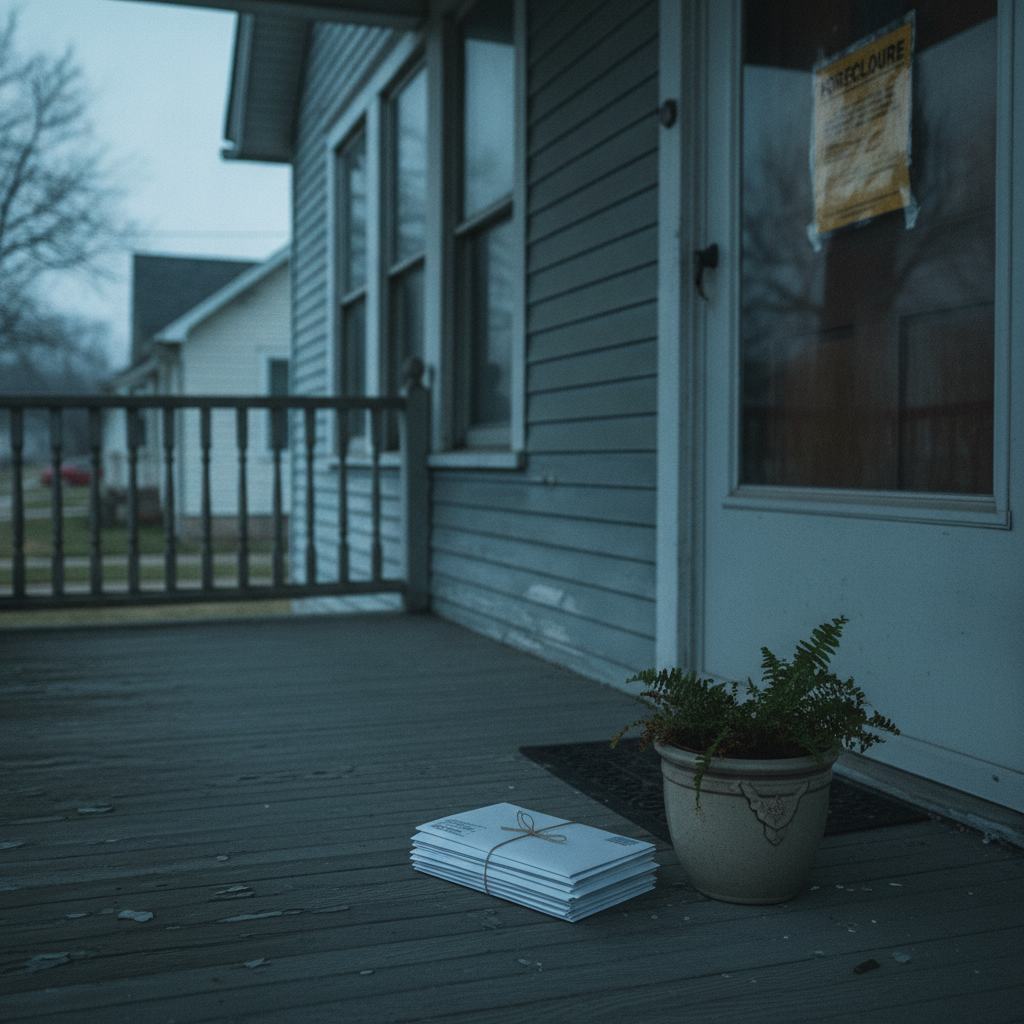
If you are facing foreclosure in Indianapolis, you have more time and more options than the lender’s letters suggest, because Indiana is a judicial foreclosure state where the property generally cannot be sold for at least three months after the complaint is filed. The lender must first send a 30-day pre-foreclosure notice, then serve you with a summons giving you 20 days to respond, before any court can authorize a sheriff’s sale. Skip The Agent can give you a written cash offer within 24 hours, close in as few as 7 days, and charge zero fees if a fast sale is the right path for your situation.
The certified letter is on the kitchen counter. The phone keeps ringing from numbers you do not recognize. You have read the word “foreclosure” so many times this week that it has started to feel like it belongs to someone else, not the person who painted that bedroom or replaced that water heater. That is the situation this guide is written for.
This article is for the Indianapolis homeowner who has missed two or three mortgage payments and just received a pre-foreclosure notice, the Marion County family who already has a court date scheduled, and the homeowner who is somewhere between “I can probably catch up” and “I have no idea what happens next.” If that is you, keep reading. If you are an Indianapolis investor researching foreclosure homes to buy, this is not your article, and you can find more useful market data in our Indianapolis, IN Real Estate Market Update.
Before we get into options, one honest sentence: nothing in this guide will undo the stress you are carrying right now. What it can do is give you a clear map of the Indiana foreclosure timeline, the real choices in front of you, and the math behind each one, so you can make a decision instead of being pushed into one. If you want to talk to a human at any point, reach out directly here.
What Foreclosure Actually Looks Like in Indianapolis
Indiana is a judicial foreclosure state. That single fact is the most important thing on this page, because it means the lender cannot foreclose by simply posting a notice on your door. They have to file a lawsuit in Marion County (or whichever Indiana county your property sits in) and let the court process play out. That gives you time, and it gives you rights.
Here is the practical timeline a homeowner in Indianapolis should expect:
- Pre-suit notice: At least 30 days before filing, the lender must send a pre-foreclosure notice by certified mail with required consumer-rights disclosures.
- Lawsuit filed and served: Once the complaint is filed, you are served with a summons. You have 20 days to file a response with the court.
- Earliest sale: The property generally cannot be sold for at least 3 months after the complaint is filed.
- Sale notice: Before any sheriff’s sale, notice must typically be published once a week for three successive weeks, with publication permitted on sheriff and county websites under a 2021 update.
In real life, court scheduling, settlement conferences, mediation, and the publication period push the actual sale timeline well past that statutory minimum. Indianapolis foreclosures often take 7 to 12 months from the first missed payment to the sheriff’s sale. That is not a guarantee, and you should never bank on a slower timeline. But it does mean you almost certainly have more runway than you think.
Indiana foreclosure cannot move faster than 30 days of pre-suit notice plus 20 days to answer plus at least 3 months from filing to sale. Most Indianapolis foreclosures take 7 to 12 months total from the first missed payment to a sheriff’s sale. That window is your decision-making time, not your panic time.
For more on what happens after the gavel falls, our deeper guide on What Happens After a Sheriff Sale in Indiana walks through redemption questions, deficiency judgments, and what eviction actually looks like.
The Emotional Weight Is Real. Name It Before You Decide.
People in foreclosure tend to make two kinds of bad decisions. They either freeze and do nothing until the sheriff’s sale date arrives, or they grab the first offer they see because they want the feeling to stop. Both come from the same place: shame and exhaustion.
If you are avoiding the mail, avoiding your spouse’s eyes at dinner, avoiding the bank’s phone calls, you are not lazy and you are not weak. You are reacting to a slow-motion crisis the way most people do. Acknowledge it. Then make decisions on a normal weekday morning with coffee in front of you, not at 11 p.m. after another sleepless night.
One specific suggestion: write down on paper, today, the dollar amount you are behind, the date of the next missed payment if you do nothing, and the name and phone number of your loan servicer. That single sheet of paper takes the situation out of your head and puts it on a desk where you can actually work on it.
Your Real Options, Ranked by Situation
There is no single right answer in foreclosure. The right move depends on three things: how much equity you have, how much time is left, and whether your income situation is temporary or structural. Here are the real options.
1. Loss Mitigation With Your Servicer
This should usually be your first call. Indiana’s foreclosure-prevention materials confirm that homeowners can request a loss mitigation review directly with the servicer at no cost. Loss mitigation can include:
- Forbearance: A temporary pause or reduction in payments, usually 3 to 6 months, with the missed amount tacked on later.
- Loan modification: A permanent change to your loan terms (rate, length, or principal) to lower the monthly payment.
- Repayment plan: Catching up the past-due amount by adding a portion to each future payment for a set period.
If your hardship is temporary (a job loss you have already recovered from, a medical event that is behind you, a divorce that is finalizing), loss mitigation is often the best path because you keep the house. If the lender has already filed suit, Indiana’s Homeowner Protection Unit can help request a court-supervised settlement conference for qualifying owner-occupied primary residences.
Loss mitigation is free, you can request it directly from your servicer at any point before a sheriff’s sale, and it can include forbearance, loan modification, or a repayment plan. In Indiana, owner-occupants whose lender has already filed suit can also request a court-supervised settlement conference through the state’s Homeowner Protection Unit.
2. Reinstatement or Payoff
If you have access to cash (a family loan, a 401(k) withdrawal, a settlement, a tax refund), you may be able to “reinstate” the loan by paying the past-due amount plus fees. This stops the foreclosure cold. The math only works if you can confidently make every future payment on time, because the lender will not give you a second reinstatement easily.
3. Traditional Sale With an Agent
If you have meaningful equity, the house is in showable condition, and you have at least 90 to 120 days before any scheduled sheriff’s sale, listing with an experienced agent is often the option that nets you the most money. We will say this plainly: when those three conditions are true, a traditional sale usually beats a cash offer on price.
The trade-offs are real, though. You will pay 5 to 6% in commissions, you may pay 1 to 3% in seller concessions, and Indianapolis homes are sitting on the market roughly 49 days on average according to recent Houzeo data, before you even reach a closing date. Add inspection negotiations and lender financing contingencies, and the timeline can stretch to 75 to 100 days from listing to closing. If your foreclosure timeline is tighter than that, listing is a gamble.
4. Short Sale
If you owe more than the house is worth, a short sale (where the lender agrees to accept less than the full payoff) can be a way out without a foreclosure on your record. Short sales in Indiana require lender approval, which takes time, and the lender may or may not waive any deficiency. This is a longer, paperwork-heavy path. Worth pursuing if you are underwater and have time, less useful if you are 60 days from a sale date.
5. Cash Sale to a Direct Buyer
A cash sale is the right answer when speed and certainty matter more than squeezing out the last dollar of price. That includes situations where:
- The sheriff’s sale date is on the calendar and listing will not close in time.
- The house has deferred maintenance, code issues, or damage that would scare off financed buyers.
- You cannot afford repairs, cleanouts, or staging to compete with other listings.
- You have moved on emotionally and want the situation closed, not extended.
- The equity left after agent commissions, repairs, and carrying costs is close to what a cash buyer would offer anyway.
At Skip The Agent, our cash offers are built on real market math. We look at recent Indianapolis comparable sales, the cost of repairs the house needs, our holding and resale costs, and a modest margin. We do not lowball, because lowball offers get rejected and we do not make money. If you want to see the exact math we use, we explain it in detail in How Cash Offers Work: The Math, the Timeline, and What to Watch Out For.
You can request a written, no-pressure offer through our free estimate page. The offer comes back within 24 hours, you can close in as few as 7 days or pick a later date that gives you time to find your next place, and you pay zero commissions and zero closing costs.
When a Cash Sale Is the Wrong Answer
We told you we would be honest about this. A cash sale is the wrong move if:
- You have substantial equity (say, 40% or more), the house is in solid shape, and you have at least four months before any sale date. List it.
- Your hardship is clearly temporary and your servicer has signaled willingness to modify. Pursue the modification.
- You are emotionally attached to the house and your income is recovering. Fight for it through loss mitigation first.
If any of those describe you, do not let urgency push you into a cash sale. Call your servicer, call a HUD-approved housing counselor (free), and explore options that keep the house.
Common Mistakes That Cost Indianapolis Homeowners Tens of Thousands
After working with hundreds of distressed homeowners across Indiana, the same expensive mistakes show up over and over.
Ignoring the certified mail. The 30-day pre-suit notice and the 20-day summons response window are real deadlines. Missing the 20-day answer window means the lender can move for default judgment, which accelerates everything. Open the mail. Even if you are not going to fight the case, knowing the date the clock started is critical.
Paying a “foreclosure rescue” company an upfront fee. Indiana has specific consumer protections around foreclosure consultants for a reason. If someone is asking for money upfront to “stop” your foreclosure, walk away. Legitimate housing counselors are free.
Selling to the first knock on the door. When a foreclosure case is filed in Marion County, it becomes public record. You will get postcards, calls, and door knocks within days. Some of those offers are reasonable. Many are 50 to 60 cents on the dollar from people hoping you are too overwhelmed to compare. Get more than one offer. Ask each buyer to put the offer in writing with no inspection contingency.
Waiting until the week of the sheriff’s sale. Once the sale is published and scheduled, your leverage drops to almost zero. Cash buyers, lenders, and the court all know you are out of time. Decisions made 90 days before the sale date are almost always better than decisions made 9 days before.
Forgetting about deficiency judgments. Indiana law allows lenders to seek a deficiency judgment if the sheriff’s sale brings in less than what you owe. The required pre-foreclosure notice describes a waiver option that can affect deficiency rights in certain cases. This is one reason a private sale (cash or traditional) for full payoff is usually better than letting the sheriff’s sale happen.
The Step-by-Step Process if You Decide to Sell
If you have weighed the options and selling is the right move, here is the actual sequence:
- Pull your payoff statement from the servicer. You need to know the exact number, including fees and interest accrued to date.
- Estimate your home’s as-is value. Get two or three opinions: a local agent’s CMA, a cash offer, and a quick online estimate. The truth is usually somewhere in the middle.
- Calculate net proceeds for each path. Traditional sale: sale price minus 6% commission minus repairs minus concessions minus carrying costs while listed. Cash sale: offer price minus payoff. Compare actual dollars in your pocket, not gross prices.
- Pick a path and notify your servicer. If you are selling, tell them. They will often pause foreclosure activity while a sale is pending, especially with a signed purchase agreement.
- Close, pay off the loan, and walk away clean. The foreclosure goes away. The credit damage from missed payments is real but recoverable. Our guide on What Happens to Your Credit After Foreclosure and How to Rebuild It walks through what to expect on your credit report and how fast you can recover.
For a broader view of every path to stopping foreclosure, including ones we did not cover in depth here, see How to Stop Foreclosure: Every Real Option From Forbearance to Fast Sale.
A Final Honest Word
If you are reading this at 2 a.m. with the lights off, here is what we want you to know: foreclosure does not define you, and the worst outcome (the sheriff’s sale plus a deficiency judgment plus seven years of credit damage) is almost always avoidable if you act before the last 30 days.
You do not have to talk to us. You do have to talk to someone: your servicer, a HUD counselor, a real estate attorney, or a trusted family member. The decision you cannot afford to make is no decision.
If you want a written, no-pressure cash offer to compare against your other options, get a cash offer on your Indianapolis home →, written offer within 24 hours with the math shown. No fees, no obligation, no follow-up calls you did not ask for.
Frequently Asked Questions
Can you sell a house in foreclosure in Indiana?
Yes, you can sell a house in foreclosure in Indiana at any point before the sheriff’s sale is completed. As long as the sale proceeds are enough to pay off the mortgage (or the lender approves a short sale for less), the foreclosure case is dismissed once the loan is paid. Most Indianapolis homeowners have several months between the first missed payment and the sheriff’s sale, which is plenty of time to close a sale.
How long does the foreclosure process take in Indianapolis?
Foreclosure in Indianapolis typically takes 7 to 12 months from the first missed payment to a sheriff’s sale because Indiana is a judicial foreclosure state. The legal minimum is roughly 30 days of pre-suit notice, plus 20 days to respond to the lawsuit, plus at least 3 months before a sale can be held, and court scheduling and publication requirements usually add more time.
What is the fastest way to stop foreclosure on my home?
The fastest way to stop foreclosure is to either reinstate the loan by paying the past-due amount in full or sell the house for enough to pay off the lender. A cash sale can close in as few as 7 days, which can stop a sheriff’s sale even when the date is close. Loan modifications and short sales take longer, often 60 to 120 days, but may be better options if you have equity or want to keep the house.
Will I owe money after a foreclosure in Indiana?
You may owe money after foreclosure in Indiana because the state allows lenders to seek a deficiency judgment when the sheriff’s sale brings in less than the loan balance. The required pre-foreclosure notice describes a waiver option that can affect deficiency rights in certain situations. Selling the house yourself (cash or traditional) for full payoff usually eliminates this risk entirely.
Should I file bankruptcy to stop foreclosure?
Bankruptcy can stop a foreclosure sale through an automatic stay, but it should be a last resort, not a first move. Chapter 13 can let you catch up on missed payments over 3 to 5 years if you have steady income, while Chapter 7 may only delay the sale by a few months. Talk to a bankruptcy attorney before filing, and only after you have explored loss mitigation, reinstatement, and selling.
How much does it cost to sell my house before foreclosure?
Selling to a cash buyer like Skip The Agent costs you nothing out of pocket because we cover closing costs and there are no agent commissions. Selling through a traditional agent typically costs 5 to 6% in commissions plus 1 to 3% in concessions and any required repairs, often totaling $15,000 to $25,000 on a $250,000 Indianapolis home. The right choice depends on how much time you have before the sheriff’s sale and how much equity is at stake.
Do I have to make repairs before selling a house in foreclosure?
No, you do not have to make any repairs to sell a house in foreclosure if you sell to a direct cash buyer who purchases as-is. Most homeowners in foreclosure do not have the cash for repairs anyway, which is why a traditional listing is often impractical. Cash buyers factor the condition of the house into the offer, so you keep your time, energy, and money for what comes next.
Will foreclosure ruin my credit forever?
Foreclosure damages your credit significantly but not permanently, typically dropping a score by 100 to 160 points and staying on your credit report for 7 years. Most people can qualify for a new mortgage in 3 to 7 years depending on the loan program, and credit scores often recover meaningfully within 2 to 3 years with on-time payments on other accounts. Selling before the foreclosure is finalized usually causes less damage than letting the sheriff’s sale happen.
Written by Addai Lewellen and Grant Umali, co-founders of Skip The Agent LLC. Addai is a lifelong Indiana resident with deep experience in the Indianapolis and Midwest real estate market. Grant brings a background in marketing, sales, and customer success. They handle every deal personally. Reach them directly at skiptheagent.llc.
Facing foreclosure? We can close before your court date.
Written offer in 24 hours. We move fast, close before your court date. No repairs, no commissions, nothing out of pocket.
Get My Free Cash OfferCloses in as few as 7 days · No repairs needed · 100% free to request
More Indianapolis, IN selling guides
Foreclosure guides in other cities
Not ready to call yet?
Get our latest market updates, seller guides, and real estate insights delivered straight to your inbox. No spam, no pressure.
One email. No spam. No pressure.